Utah Freeze-Thaw Cycles: Foundation Risk in Cottonwood Heights
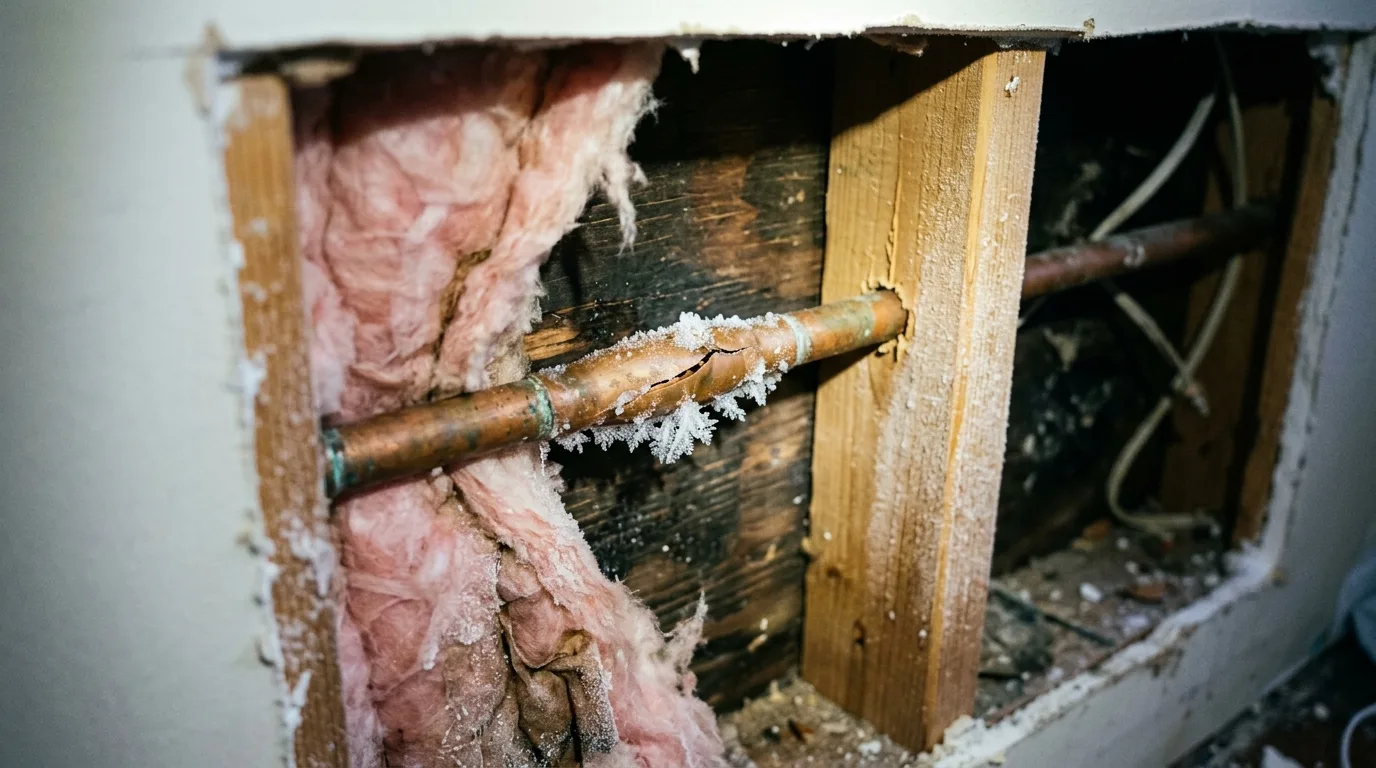
Each spring, Cottonwood Heights homeowners find things that weren’t there last fall: cracks in foundation walls that opened over winter, gaps in mortar joints where they were once solid, and in some cases, basement floors that have heaved slightly out of level. This isn’t bad luck — it’s the physical consequence of Utah’s freeze-thaw cycle acting on Cottonwood Heights’ alkaline clay soil, and it plays a direct role in water damage risk for every home in the area.
In this post, we explain exactly how freeze-thaw cycles affect foundations in Cottonwood Heights, what the damage looks like over time, and how this process creates the water intrusion pathways that lead to expensive restoration projects.
Water Damage After Foundation Movement?
Professional water damage restoration in Cottonwood Heights, UT. Call (877) 698-1311.
Why Cottonwood Heights Foundations Face Unique Pressure
The foundation damage mechanism begins not with the foundation itself but with the soil around it. The alkaline clay soil that dominates the subsurface throughout Cottonwood Heights and Salt Lake County behaves differently from sandy or loamy soils when it freezes and thaws. Clay has two properties that create structural problems: it absorbs and retains water (holding moisture against foundation walls long after a rain or snowmelt event), and it expands significantly when that water freezes and contracts again when it thaws.
When soil adjacent to a foundation wall freezes, the expansion is called frost heave — the soil physically pushes against the foundation with force that can exceed thousands of pounds per square foot. Horizontal cracks in poured concrete foundation walls, and stepped cracks following mortar joints in concrete block foundations, are the most common visible results. These cracks don’t just indicate past movement; they create future water intrusion pathways. A crack that opens in winter — when the soil is frozen and expanded — may close partially in summer, but the concrete or block material that shifted doesn’t return precisely to its original position.
How Freeze-Thaw Cycles Crack Underground Drain Lines
The freeze-thaw impact on foundations is visible. The impact on underground drain lines is not — and it’s equally consequential. Clay sewer laterals, cast iron drains, and even PVC underground plumbing are subject to the same frost-heave soil movement that cracks foundation walls. As the soil shifts laterally and vertically through the freeze-thaw cycle, underground pipes experience bending forces at joint locations.
Older homes throughout the Knudsen’s Corner and Old Mill neighborhoods — many built with clay tile sewer laterals that are now 40–60 years old — are most vulnerable because clay tile joints are inherently less resistant to bending than modern PVC bell-and-spigot joints. Root intrusion at these weakened joints is also more common, because tree roots seek moisture at any penetration point. A sewer lateral that develops a root intrusion blockage typically does so because a joint was first compromised by freeze-thaw movement.
Foundation Crack Causing Water Intrusion?
Call Cottonwood Heights Water Damage Restoration at (877) 698-1311 for a free assessment.
Types of Freeze-Thaw Foundation Damage
Horizontal cracks in poured concrete walls: These indicate lateral pressure from expanding soil. Horizontal cracks more than 1/4 inch wide warrant structural engineering evaluation, as they may indicate loss of wall stability under the soil load.
Stepped cracks in block foundations: Stair-step cracking following mortar joints in concrete block walls indicates differential settlement or lateral soil pressure. These cracks almost always create water intrusion pathways because mortar joint failures allow direct soil-to-interior communication.
Floor slab heaving: Freezing of moisture beneath the slab causes the slab to lift and crack. In finished basements throughout the Crestwood neighborhood, heaved slab sections create uneven flooring and, in severe cases, break floor drain connections that then become water entry points.
Joint separation: The connection between a poured concrete wall and the footing it sits on can separate slightly under freeze-thaw movement — creating a perimeter gap at the base of the foundation wall through which groundwater enters during snowmelt or heavy rain.
Practical Uses: How This Affects Water Damage Risk
Foundation damage from freeze-thaw cycles creates water intrusion pathways that may remain minor for years before manifesting as a significant water damage event. A hairline crack in a Cottonwood Heights foundation wall allows minimal intrusion in a dry summer but can admit gallons of water per hour during peak spring snowmelt when the groundwater table is elevated and hydrostatic pressure is at its maximum.
The homeowner impact is often a basement flooding event in year 5 or 10 after the crack first appeared, when seasonal conditions finally align to push water through it in volume. Regular foundation inspection — looking for new cracks or the widening of existing ones — each spring after the freeze-thaw season allows you to address pathways before they become flooding events.
How Alkaline Clay Soil Extends the Moisture Window
The soil-material interaction framing here is important: it’s not just that clay soil creates frost heave pressure — it’s that clay soil retains moisture against foundation walls for weeks after an intrusion event. Where sandy soil allows water to drain away from a crack relatively quickly, clay holds it in sustained contact, extending the time that water is available to enter through foundation gaps and the time that structural materials adjacent to the foundation are exposed to moisture. This makes the water damage consequences of a given crack more severe in Cottonwood Heights than in areas with more permeable soils.
Cost Consequence Framing: What Foundation Cracks Cost to Ignore
A foundation crack that creates a water intrusion pathway costs far more to remediate after a flooding event than to seal before one occurs. Foundation crack injection (a polyurethane or epoxy injection that seals the crack from the interior) typically costs $200–$600 per crack as a standalone repair. The same crack, left to allow seasonal water intrusion for 3–5 years before a significant flooding event occurs, creates basement water damage costing $2,000–$8,000 in extraction, drying, and reconstruction — plus the crack still needs sealing.
Frequently Asked Questions
How do I tell if a foundation crack in my Cottonwood Heights home is structural or cosmetic?
Horizontal cracks in poured concrete walls that extend more than a few feet, or cracks wider than 1/4 inch, warrant a structural engineer evaluation — they may indicate active wall movement under soil pressure. Vertical cracks in poured concrete and stepped cracks in block walls are more commonly settlement or shrinkage related, though they still create water intrusion pathways. Any crack that has changed width since you first noticed it indicates active movement and requires professional assessment.
Do I need a permit to repair foundation cracks in Cottonwood Heights?
Foundation repairs that are cosmetic (crack injection to stop water intrusion) typically do not require a Cottonwood Heights building permit. Structural foundation repairs that alter the wall assembly may require permits. Contact Cottonwood Heights Building Services at 801-944-7062 to confirm the scope of work for any planned repair.
How does freeze-thaw foundation damage relate to water damage restoration?
Foundation cracks and joint separations created by freeze-thaw movement are the entry points for the basement flooding events that require professional water damage restoration. Addressing foundation cracks as a preventive measure is the most cost-effective way to reduce water damage risk in Cottonwood Heights — but when flooding does occur through these pathways, professional water mitigation is essential to prevent mold and structural deterioration.
Water Damage After a Foundation Event?
Cottonwood Heights Water Damage Restoration provides IICRC-certified extraction and structural drying. Call (877) 698-1311.
Related: