Mold After Water Damage: What Cottonwood Heights Homeowners Need to Know
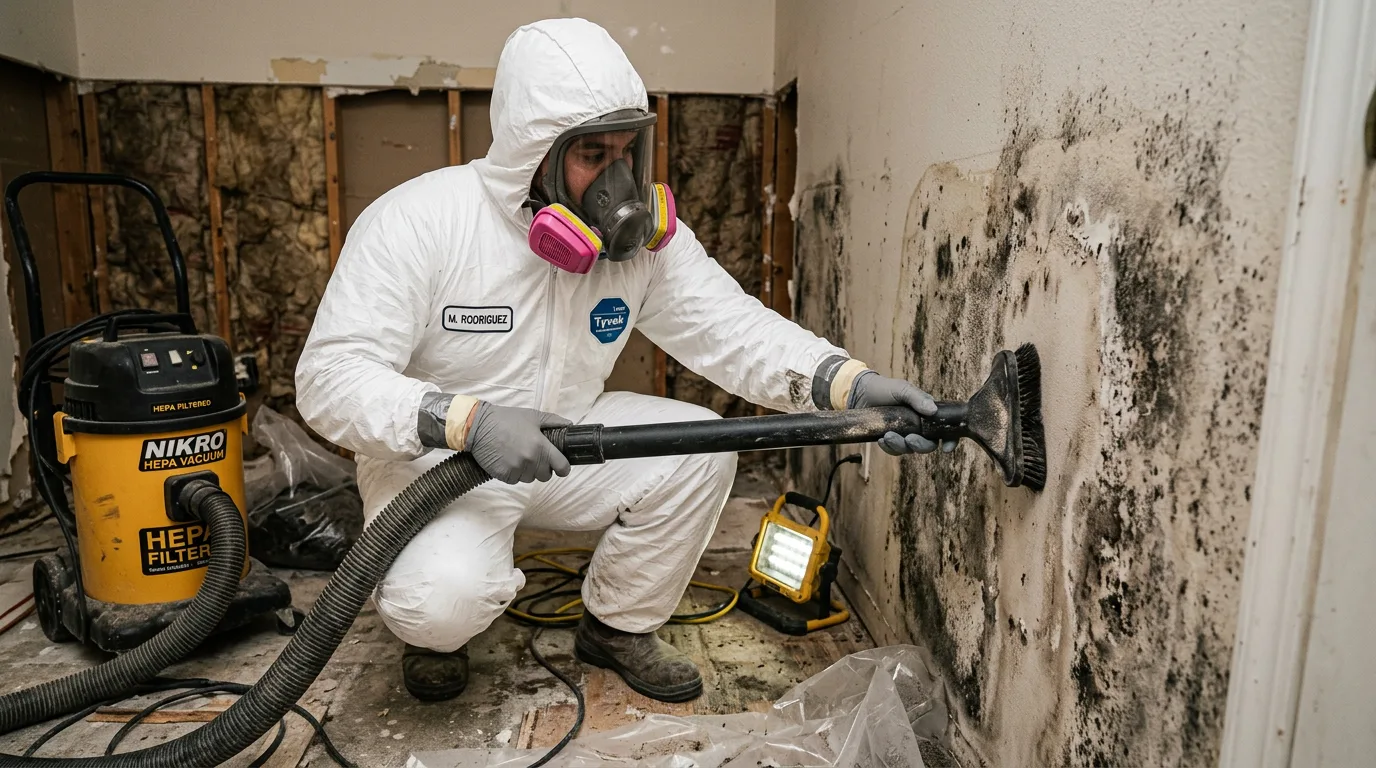
Mold is the second chapter of a water damage story — the one that starts 24 to 48 hours after the first chapter ends and continues writing itself whether you notice it or not. In Cottonwood Heights, where the alkaline clay soil holds moisture against foundation walls and building materials for extended periods, mold after a water event is not a theoretical risk. It’s an almost certain consequence when water intrusion is not professionally extracted and dried within the first 24 hours. This guide tells you what mold after water damage looks like, when to call a professional, and what proper mold remediation in Cottonwood Heights involves.
In this post, we cover how mold develops after water events, the signs that mold has established in your home, what professional mold remediation looks like, and how to prevent mold from establishing after a water event.
Mold Found After a Water Event in Cottonwood Heights?
IICRC-certified mold remediation — call (877) 698-1311 for a same-day assessment.
Why Cottonwood Heights Homes Develop Mold After Water Events
Mold spores are present in virtually every indoor environment — they are in the air you breathe right now, at concentrations that are harmless. The problem begins when those spores land on a material that is wet for more than 24–48 hours at temperatures above approximately 50°F. Under those conditions, spores germinate, hyphae extend into the material, and visible mold colonies develop within days.
The homeowner impact framing for Cottonwood Heights is this: a water event that is professionally extracted and dried within 12–24 hours creates a low mold risk outcome. The same water event left to dry naturally — or addressed only with household fans — creates a high mold risk outcome. The difference between these two outcomes often costs thousands of dollars in remediation and reconstruction.
Cottonwood Heights’ clay soil makes the problem worse. After a basement flooding event, clay soil holds moisture against foundation walls for 2–3 weeks. Even after the visible water is removed, the wall material remains in contact with moisture from the soil side — maintaining the humid conditions mold requires. This is why professional drying in Cottonwood Heights must include wall material moisture verification, not just air humidity measurement.
Signs That Mold Has Established After a Water Event
Musty or earthy odor: The first indicator of mold presence is typically olfactory — a musty, earthy smell in affected areas even after visible water is gone. This smell is produced by microbial volatile organic compounds (MVOCs) that mold releases during active growth. Its presence in a previously flooded space is diagnostic even without visible mold.
Discoloration on walls, ceilings, or floors: Black, green, gray, or white growth on previously wetted surfaces indicates established mold colonies. Mold on painted drywall surfaces is visible early because paint provides a food source. Mold inside wall cavities (on the paper backing of drywall or on framing lumber) may not be visible until affected material is removed.
Peeling or bubbling paint: Ongoing moisture migration through a wall assembly can cause paint to delaminate from drywall paper — indicating that the wall material is still wet and likely supporting mold growth behind the surface.
Physical symptoms in occupants: Mold exposure can cause respiratory irritation, allergy-like symptoms (sneezing, congestion, itchy eyes), and in sensitive individuals, more significant respiratory effects. New or worsening symptoms that improve when leaving the building suggest mold exposure.
Mold Assessment in Cottonwood Heights, UT
Don't wait — mold spreads quickly. Call (877) 698-1311 for a professional evaluation.
Types of Mold Found After Water Damage
Cladosporium: One of the most common post-water-damage molds found in Salt Lake County homes. Green, brown, or black in color. Grows on painted surfaces, wood, and fabric. Generally a lower-health-risk mold type but can cause respiratory irritation.
Penicillium/Aspergillus: Often appear blue or green on wetted surfaces. Penicillium grows rapidly on wet building materials and is common in water-damaged drywall and insulation in Cottonwood Heights basements. Some aspergillus species can cause more significant health effects in immunocompromised individuals.
Stachybotrys chartarum (black mold): Often called “toxic black mold,” Stachybotrys is a dark green to black mold that requires very wet conditions for extended periods to establish — typically 72+ hours of saturation. While its health effects are sometimes overstated in media, it does produce mycotoxins that can cause health effects and its presence warrants professional remediation regardless.
How Mold Remediation Works in Cottonwood Heights
Professional mold remediation follows IICRC S520 protocols — the standard that insurance adjusters across Salt Lake County expect and that third-party clearance testing verifies. The process begins with containment: establishing negative air pressure and physical barriers between the affected area and unaffected spaces to prevent spore migration during remediation work.
Technicians in appropriate PPE remove mold-contaminated porous materials (drywall, insulation, carpet) and bag and seal them for disposal. Hard, non-porous surfaces (concrete, tile, PVC) are cleaned with detergent and treated with EPA-registered hospital-grade antimicrobial agents. Air scrubbers with HEPA filtration run throughout the process to capture airborne spores. After work completion, independent clearance testing (air sampling) verifies that mold levels have returned to acceptable baseline conditions.
Process: The Right Timeline for Mold Prevention After a Water Event
The optimal timeline is: call a water restoration professional within 2 hours of discovering a water event. Have extraction completed within 6–12 hours. Begin structural drying within 12–24 hours. This timeline maintains the window before mold can establish in most materials. If extraction and drying begin within this window, mold remediation is typically unnecessary — the water is simply removed and the materials dried before mold has time to colonize.
When water events are discovered after 24–48+ hours have passed, mold assessment becomes part of the restoration process. We conduct air sampling and surface assessment during the drying phase on late-discovered events to identify any mold establishment before reconstruction begins — ensuring that new drywall and flooring are installed on a clean, mold-free substrate.
Frequently Asked Questions
How quickly does mold grow after water damage in Cottonwood Heights?
Mold spores can germinate on wet porous building materials within 24–48 hours at typical indoor temperatures (above 55–60°F). Visible mold colonies typically appear within 3–7 days of sustained wetness. In Cottonwood Heights homes where clay soil holds moisture against foundations, below-grade materials are at elevated risk even after visible water is removed, extending the establishment window.
Can I remediate mold myself after water damage in my Cottonwood Heights home?
Small surface mold (less than 10 square feet on non-porous surfaces) can be addressed with appropriate protective equipment and EPA-registered disinfectants. Mold inside wall cavities, in insulation, or affecting more than a small area requires professional remediation to ensure containment prevents cross-contamination and that clearance testing confirms successful remediation. Attempting DIY remediation of significant mold without proper containment typically spreads spores to previously unaffected areas.
Does homeowners insurance cover mold remediation in Cottonwood Heights?
Mold remediation resulting from a covered water loss (burst pipe, appliance failure) is typically covered under standard homeowners policies. Standalone mold claims without an associated covered water event face higher scrutiny. Prompt reporting of the original water event and immediate mitigation action are the strongest factors supporting mold coverage under a homeowners policy.
IICRC-Certified Mold Remediation in Cottonwood Heights
We handle mold from assessment through clearance testing and reconstruction. Call (877) 698-1311.
Related: