7 Ways to Prevent Basement Flooding in Cottonwood Heights (Utah-Specific)
Want to skip the flood damage cleanup bill this spring? You’re not alone. Basement flooding in Cottonwood Heights is overwhelmingly a preventable event — not an unavoidable consequence of living near the Wasatch Mountains. The homeowners who consistently avoid flooding aren’t lucky; they’re prepared. This guide gives you 7 concrete steps, specific to Cottonwood Heights’ soil and climate conditions, that dramatically reduce your basement flooding risk before the next snowmelt season begins.
In this post, we cover the 7 most effective prevention measures for Cottonwood Heights basements, explain why each matters specifically in this climate and soil environment, and give you a practical timeline for implementing them.
Had Basement Flooding Before?
We handle flood cleanup and prevention consultations. Call (877) 698-1311.
Why Basement Flooding Prevention Matters More in Cottonwood Heights
Flood damage cleanup in Cottonwood Heights consistently runs $1,500–$8,000 for a mid-size basement flooding event. The spring snowmelt season — March through May — is when most basement flooding events occur, driven by elevated groundwater tables from canyon watershed runoff and the saturation of Cottonwood Heights’ alkaline clay soil. Prevention is not just more convenient than remediation; it is dramatically less expensive. The seven measures below cost a combined $500–$3,000 to implement comprehensively — a fraction of a single significant flooding event.
1. Maintain and Test Your Sump Pump — Every February
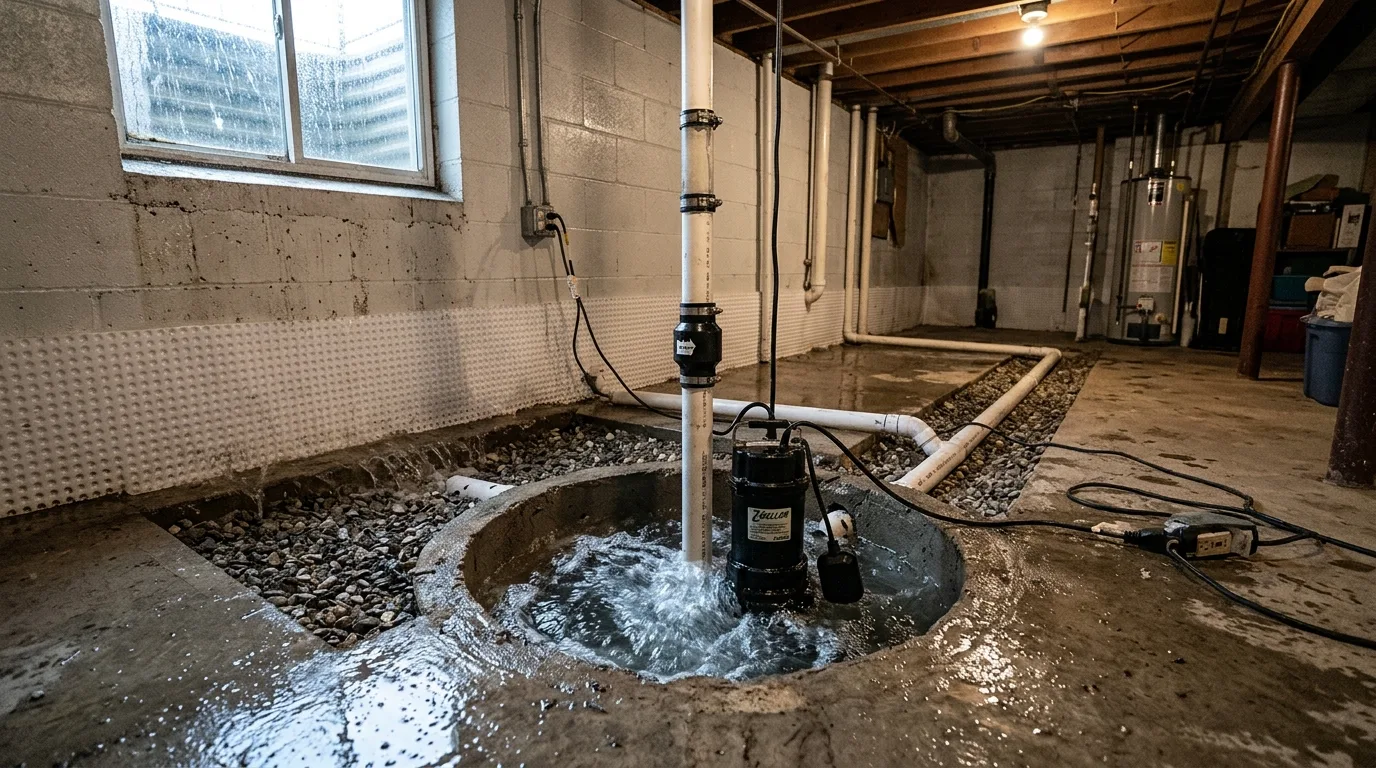
The sump pump is the most important piece of flood prevention equipment in a Cottonwood Heights basement. A sump pump that fails during peak snowmelt (when it’s needed most) is the most common cause of preventable basement flooding in this area.
Test your sump pump annually in February — before snowmelt season begins. Pour water directly into the sump pit until the float triggers. Confirm the pump activates, discharges through the drain line, and then shuts off properly. Check the discharge line exterior outlet to confirm it’s clear of ice or debris. If the pump is more than 7 years old, consider replacing it proactively — the cost of a new pump ($150–$400 installed) is far less than the cost of a single flooded basement.
Add a battery backup unit to keep the pump operational during power outages, which are more common during spring storms. A pump that fails during a power outage on the wettest night of the year is a common failure scenario in Cottonwood Heights.
2. Improve Foundation Drainage and Grading
The ground immediately adjacent to your Cottonwood Heights foundation should slope away from the structure at a minimum of 1 inch per foot for the first 6 feet. In Cottonwood Heights’ alkaline clay soil, settled or improperly graded soil creates a bowl around the foundation that concentrates water exactly where it can cause the most damage.
Walk the perimeter of your foundation after the snow melts in spring and observe where water flows. Any area where water pools against the foundation warrants regrading with compacted fill — a project that typically costs $300–$800 and pays for itself the first time it prevents a flooding event.
3. Extend Downspouts 6+ Feet from the Foundation
Roof drainage that terminates at the foundation perimeter through standard downspout outlets is one of the leading contributors to basement moisture intrusion in Cottonwood Heights. A standard residential roof collects hundreds of gallons of water during a moderate snow or rain event — and all of that water discharges at foundation height if downspouts aren’t extended.
Downspout extensions ($5–$15 each at hardware stores) or underground drainage pipes connected to daylight drainage can route roof drainage well away from the foundation. Ensure the discharge point is on ground that slopes away from the house — not toward a neighbor’s or your own foundation.
4. Install and Maintain Window Well Covers and Drains
Window well overflow is one of the most common basement flooding entry points we see in Cottonwood Heights homes. During a snowmelt event, window wells without proper drainage fill with meltwater and overflow into the window frame — a pathway directly into the basement.
Check window well drains each spring to confirm they’re clear and functional (a slow drain into the window well when you pour water in indicates a blocked drain). Install polycarbonate window well covers to prevent snow accumulation in wells during winter. These covers cost $20–$60 each and prevent a common failure mode entirely.
Already Had Basement Flooding This Spring?
Call (877) 698-1311 for flood damage cleanup in Cottonwood Heights, UT.
5. Install a Backflow Prevention Valve on Your Sewer Lateral
If your Cottonwood Heights home has experienced sewer backup through floor drains during previous spring events — especially in older neighborhoods like Knudsen’s Corner — you’re experiencing municipal sewer surcharging. When the city sewer system approaches capacity during peak snowmelt, pressure in the main line causes backflow into residential laterals, entering your basement through the lowest floor drain in the building.
A backflow prevention valve (also called a backwater valve) on the sewer lateral automatically closes when reverse flow is detected, preventing sewage from entering the basement through floor drains. This is a plumbing project requiring a licensed plumber and typically costs $500–$2,000 installed — and prevents one of the most expensive and hazardous types of basement flooding (Category 3 sewage backup requiring hazmat cleanup at $7–$7.50 per sq ft).
6. Seal Foundation Cracks Before Spring
Foundation cracks — especially horizontal cracks in poured concrete walls and stepped cracks in block foundations — are the primary entry point for water intrusion in Cottonwood Heights basements. The freeze-thaw cycle from November through March opens new cracks and widens existing ones each year. A post-winter inspection each March should identify any new cracks that need sealing before spring snowmelt arrives.
Polyurethane crack injection sealing, performed from the interior, closes cracks permanently and is flexible enough to accommodate minor future movement. This approach costs $200–$400 per crack and is far less expensive than the water damage that enters through an unsealed crack during a peak snowmelt event.
7. Consider an Interior Drainage System for Chronic Moisture
For Cottonwood Heights basements that experience chronic moisture migration (not dramatic flooding but persistent seepage or elevated humidity from wall absorption) and where exterior waterproofing is impractical, an interior perimeter drainage system is the most reliable long-term solution. Interior drainage systems — a perforated pipe installed at the base of the foundation wall, routing water to a sump pit — capture water that enters through the wall material itself before it reaches the basement floor.
These systems cost $5,000–$15,000 depending on basement perimeter and contractor, but for homes with persistent moisture problems that haven’t responded to surface-level interventions, they represent the definitive solution to chronic moisture intrusion in Cottonwood Heights’ clay soil environment.
Frequently Asked Questions
What is the most cost-effective basement flood prevention measure for Cottonwood Heights homes?
Sump pump maintenance and testing (annual cost: near zero for testing; $150–$400 for replacement when needed) provides the best prevention-to-cost ratio for most Cottonwood Heights homes. The pump is the first line of defense and the most common point of failure during peak flooding events. Foundation grading improvement is the second-highest value measure, particularly for homes where water currently flows toward the foundation perimeter.
How do I know if my Cottonwood Heights basement has a drainage problem before it floods?
Signs of drainage issues before flooding occurs: efflorescence on foundation walls, musty odor in the basement, elevated humidity readings in the basement space, visible moisture seeping through cracks or mortar joints after rain or snowmelt events, or soggy soil immediately adjacent to the foundation. Any of these indicators warrants preventive action before the next high-risk season.
Does the Cottonwood Heights clay soil make basement flooding prevention harder?
Yes — clay soil’s poor drainage characteristics make it harder to get water to move away from the foundation quickly. This means that grading improvements must be more aggressive (steeper slope, greater distance) to achieve the same result as grading in more permeable soils. Interior drainage systems are also more commonly needed in clay soil environments than in sandy-soil areas.
Protect Your Cottonwood Heights Basement This Season
Prevention consultation and flood cleanup — call (877) 698-1311.
Related: