Why Cottonwood Heights Homes Are Prone to Frozen Pipes
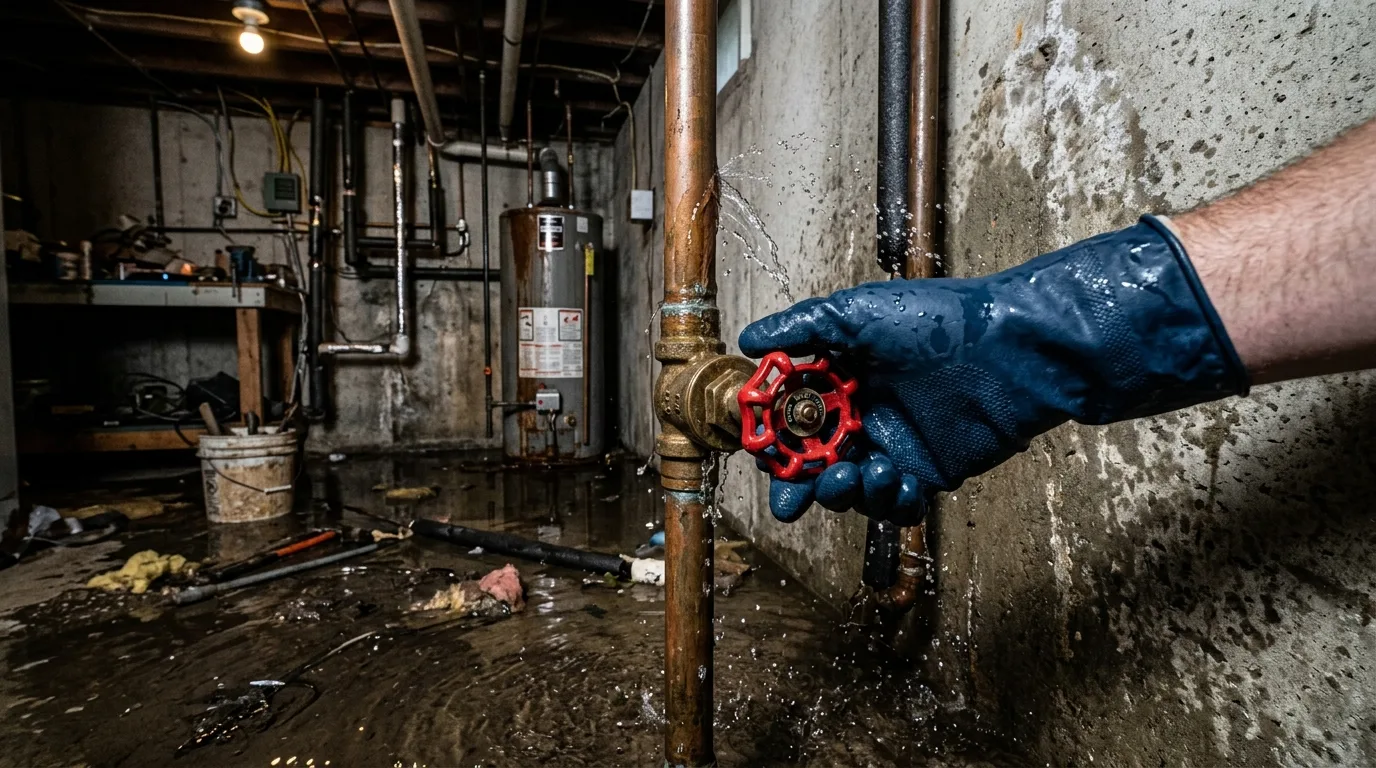
Ask any Cottonwood Heights homeowner who has dealt with a burst pipe, and they’ll tell you the same thing: it happened overnight, when temperatures dropped, and they woke up to water in places water shouldn’t be. Burst pipe repair in Cottonwood Heights is one of the most common winter service calls we receive — and it’s not random bad luck. There are specific reasons why homes in this area are vulnerable, and specific measures that dramatically reduce the risk.
In this post, we explain why Cottonwood Heights’ climate creates frozen pipe risk, which pipes are most vulnerable, and what you can do before this winter to protect your home.
Pipe Burst Already? Call Now.
24/7 burst pipe water damage cleanup in Cottonwood Heights, UT. (877) 698-1311.
Why Cottonwood Heights’ Freeze-Thaw Cycle Is the Real Culprit
A single deep freeze is not the primary cause of residential pipe bursts in Cottonwood Heights. The real damage mechanism is the freeze-thaw cycle — temperatures that repeatedly cross above and below 32°F throughout the winter season. Cottonwood Heights’ January average low is 23°F, but temperatures frequently swing back above freezing on sunny January and February days before dropping below again at night.
Each freeze-thaw cycle expands and contracts the water inside pipes, putting cumulative stress on joints and fittings. Over a season of repeated cycling, copper solder joints develop microscopic cracks; PVC compression fittings loosen slightly; crimp connections on PEX tubing weaken at the crimp point. The pipe may not burst during any single freeze — but after 10 or 15 freeze-thaw cycles, a joint that would have held for decades fails during an otherwise routine cold night. This pattern explains why Cottonwood Heights homeowners sometimes see burst pipes in homes where the plumbing has been problem-free for 15 or 20 years.
Which Pipes Are Most Vulnerable in Cottonwood Heights Homes
Pipes in exterior walls: Any supply line that runs through an exterior wall cavity — whether it’s a hose bib supply, a bathroom vanity supply near an exterior wall, or a kitchen sink supply on an outside-facing cabinet — is exposed to outdoor temperatures through the wall assembly. In homes throughout the Crestwood and Danish Town neighborhoods built in the 1970s and 1980s, wall insulation is thinner by today’s standards, and pipes in exterior walls can reach freezing temperatures before interior temperatures become noticeably cold.
Garage plumbing and utility connections: Pipes that pass through an attached garage — supply lines to a utility sink, connections from the water heater, or the main service line entering through the garage foundation — are exposed to garage temperatures that can drop to near-outdoor levels overnight. An attached garage provides no meaningful insulation benefit unless it is heated.
Attic supply lines: Older Cottonwood Heights homes sometimes have supply lines running through unheated attic spaces to supply second-floor bathrooms. These pipes are among the most vulnerable because the attic sees near-outdoor temperatures in winter with no heat source and minimal thermal mass.
Crawl space supply lines: Homes with crawl space foundations throughout Salt Lake County often have supply lines running through the crawl space with inadequate insulation. When crawl space vents remain open in winter (as older building practice recommended for moisture management), the crawl space approaches outdoor temperatures and uninsulated pipes freeze.
Outdoor hose bibs and irrigation backflow preventers: Frost-free hose bibs are designed to drain the supply line when closed, but require that the supply valve inside the home be used properly and that the hose be disconnected. Irrigation system backflow preventers that are not properly blown out and insulated are among the most common freeze-burst points in Cottonwood Heights neighborhoods with in-ground irrigation.
Worried About Frozen Pipes This Winter?
Call (877) 698-1311 — we handle burst pipe water damage cleanup 24/7 in Cottonwood Heights.
How Frozen Pipes Become Burst Pipes
Water expands approximately 9% when it freezes, and it does not simply push backward through the open faucet — it creates pressure within the pipe section between the freeze point and the first closed valve downstream. This pressure (up to 2,000 PSI in a closed section) overwhelms the tensile strength of copper, PVC, and PEX pipe. The failure usually happens at the weakest point in the assembly — a fitting, a joint, or a location where the pipe has been weakened by previous thermal cycling.
The failure typically happens as temperatures begin to rise, not as they fall — because this is when the ice plug melts enough to allow the pressure differential to drive water through the failure point. This explains why homeowners often don’t discover a burst pipe until morning, hours after the coldest overnight temperature.
What Happens After a Pipe Bursts
A typical residential supply pipe at normal pressure (40–80 PSI) discharges 50–100 gallons per hour. An overnight event of 6–8 hours means 300–800 gallons of water discharged into your home — usually inside a wall cavity, where it saturates framing, insulation, and drywall paper before reaching the floor. In Cottonwood Heights, where January average lows sit at 23°F, overnight pipe bursts are common because the coldest temperatures occur precisely when nobody is awake to notice.
By the time the homeowner discovers the burst, water has typically migrated through wall framing, under flooring, and into adjacent rooms. The drying process requires industrial air movers and dehumidifiers running 24 hours a day for 3–7 days, with daily moisture monitoring to track progress — a process that takes significantly longer than most homeowners expect.
Preventive Measures That Actually Work
Insulate exterior-wall pipes: Foam pipe insulation is inexpensive and takes under an hour to install on accessible exterior-wall supply lines. For pipes in exterior walls where retrofitting insulation inside the wall isn’t practical, heat tape (thermostatically controlled pipe heating cable) provides reliable freeze protection.
Seal air leaks near pipes: Cold air infiltration through penetrations in the building envelope is often the mechanism that freezes pipes in otherwise interior locations. Sealing gaps around pipe penetrations through framing and rim joist areas with expanding foam eliminates the cold air pathway without requiring pipe relocation.
Leave cabinet doors open during cold snaps: For kitchen and bathroom vanity plumbing on exterior walls, leaving cabinet doors open during cold snaps allows warm interior air to circulate around supply lines — a simple, free measure that prevents many freeze events.
Maintain minimum indoor temperature when away: Homes left unoccupied during cold periods — including ski condo owners near the Cottonwood Canyons — should maintain a minimum indoor temperature of 55°F to prevent pipe freeze events while the property is vacant. Vacation home pipe bursts discovered days or weeks after the event are among the most expensive water damage jobs we handle.
Frequently Asked Questions
Why do Cottonwood Heights homes get frozen pipes more often than homes in warmer Utah cities?
Cottonwood Heights’ position at 4,800 feet elevation at the mountain base creates colder winter temperatures than the valley floor, with average January lows of 23°F and frequent overnight freeze-thaw cycling. This combination — colder base temperatures plus repeated thermal cycling — stresses pipe joints more than the sustained cold of a single deep freeze. Properties in the Danish Town and Brighton areas with older plumbing are especially vulnerable.
How do I know if a pipe froze but didn’t burst?
Signs of a pipe that froze but hasn’t yet burst: reduced or zero water flow from a specific fixture during cold weather; frost or ice visible on an exposed pipe section; the sound of trickling or unusual water movement in walls. If you find a frozen pipe, do not use open flame to thaw it — use a hair dryer or warm towels, and call a plumber if you can’t locate or safely access the frozen section.
How much does burst pipe cleanup cost in Cottonwood Heights?
Costs range from $450–$1,000 for events caught within the first hour, to $1,361–$6,270 for room-scale saturation, and $7,000+ when pipes discharge for an extended period. Most homeowners insurance policies cover burst pipes as sudden and accidental water damage. See our full guide to burst pipe repair in Cottonwood Heights for more details.
Burst Pipe Cleanup in Cottonwood Heights, UT
We coordinate with your plumber and handle the water damage side from extraction to reconstruction. Call (877) 698-1311.
Related: